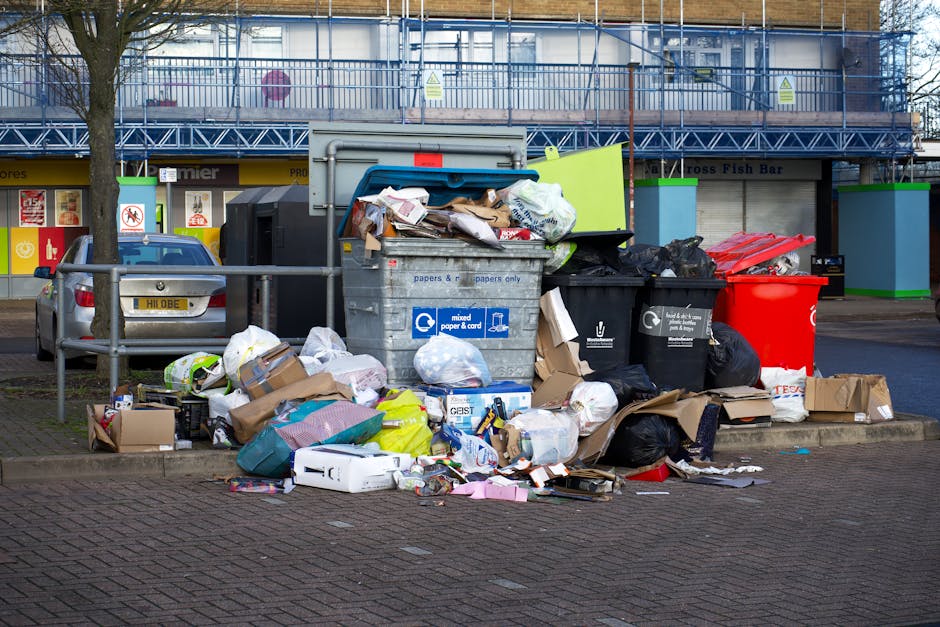
Greenwich Council bulky waste rules for Deptford removals
If you are planning a move in Deptford, bulky waste can quietly become the bit that causes the most stress. Old wardrobes, broken beds, an awkward sofa that does not fit down the stairs, a mattress that has seen better days - it all has to go somewhere. Understanding the Greenwich Council bulky waste rules for Deptford removals helps you avoid fly-tipping risks, missed collections, surprise costs, and those last-minute decisions that always seem easy until moving day arrives. Truth be told, this is one of those small planning jobs that saves a lot of headache later.
This guide explains how bulky waste handling usually works for local moves, what to check before you book a clearance, when a council collection makes sense, and when a professional mover is the cleaner, quicker option. You will also find a simple checklist, a comparison table, and practical steps you can follow without overthinking it. Let's make it manageable.
Table of Contents
- Why Greenwich Council bulky waste rules for Deptford removals matters
- How Greenwich Council bulky waste rules for Deptford removals works
- Key benefits and practical advantages
- Who this is for and when it makes sense
- Step-by-step guidance
- Expert tips for better results
- Common mistakes to avoid
- Tools, resources and recommendations
- Law, compliance, standards, or best practice
- Options, methods, or comparison table
- Case study or real-world example
- Practical checklist
- Conclusion
- Frequently asked questions
Why Greenwich Council bulky waste rules for Deptford removals Matters
Deptford sits right on the edge of a very practical moving question: what do you do with bulky items that are too big for a normal bin collection? Councils, including Greenwich, set rules so that large household items are collected, handled safely, and disposed of properly. That matters because removals are already busy enough without adding a curbside argument about a sofa or a pile of flat-pack shelves.
In a real move, bulky waste rules affect timing, access, costs, and your moving plan. If you leave items outside at the wrong time, or assume your mover will automatically take everything, you can end up with clutter still in the hallway when the keys need handing over. Not ideal, to say the least.
For renters especially, bulky waste can also affect end-of-tenancy cleanliness. For homeowners, it can influence how quickly you can stage a property for sale. And for businesses, office furniture disposal can shape the whole handover schedule. That is why a local, rules-aware approach matters. It is not just admin; it is part of the move itself.
If you are moving a household, a smaller load can often be handled through general removal support such as home moves or house removals, while awkward one-off items may suit a dedicated furniture pick up or broader furniture removals service. The best choice depends on volume, urgency, and access.
How Greenwich Council bulky waste rules for Deptford removals Works
At a practical level, bulky waste collection is usually about arranging for larger items to be taken away by an authorised service rather than putting them out with ordinary household waste. In Greenwich, that means you should expect specific booking rules, item restrictions, and collection instructions. The exact process can change, so the safest habit is to confirm current guidance before you build your removal schedule around it.
Most households thinking about bulky waste during a move need to solve four questions:
- What counts as bulky waste? Typically large items such as sofas, beds, wardrobes, tables, chairs, white goods, and similar household furniture.
- Can it be collected as-is? Some items may need to be dismantled, bagged, or made safe before collection.
- When can it be put out? Timing usually matters, especially if items are being collected from outside your property.
- Who is responsible if access is awkward? This is where lift access, tight stairwells, parking, and permit issues begin to matter.
Moving day reality is rarely neat. A wardrobe that looked fine in a bedroom can turn into a narrow-stairs puzzle at 7:30 in the morning. That is one reason people often pair clearance planning with services like man and van or removal services, especially when there are mixed loads of furniture, boxes, and bits to recycle.
Another practical point: not every item should go to council bulky waste. Some things are better kept for reuse, resale, donation, or specialist disposal. A broken table with one damaged leg might be salvageable. A mattress with staining usually is not. You do not need to make every decision perfectly, but you do need to avoid putting unsuitable items into a collection request. That is where delays creep in.
Key Benefits and Practical Advantages
Following the local rules properly is not just about being tidy. It has a few real advantages that make moving less chaotic.
- Fewer last-minute surprises: You know what will be removed, what must stay, and what needs dismantling.
- Less risk of blocking access: Hallways, lifts, and pavements stay clearer.
- Cleaner end-of-tenancy handovers: This is especially useful if you are renting in Deptford and need the property left in good order.
- Better recycling outcomes: Items separated carefully are easier to reuse or recycle.
- Lower stress on moving day: Fewer "where does this go?" moments when the van has already arrived.
There is also a safety angle. Old furniture can be heavy in awkward ways. A chest of drawers may look harmless until you tilt it on a landing and realise it has a mind of its own. In our experience, planning bulky waste early is one of the easiest ways to avoid silly strains and scuffed walls.
If you want to keep your move efficient, pairing planning with packing and boxes or packing and unpacking services can help reduce the clutter that often triggers bulky waste confusion in the first place.
Who This Is For and When It Makes Sense
This topic matters to more people than you might think. If you are moving out, moving in, downsizing, clearing a probate property, or emptying a flat after a tenancy, bulky waste rules can shape the whole job.
It is especially relevant if you are:
- leaving a rented flat and need to clear old furniture quickly;
- upgrading household furniture and want the old set removed;
- handling a probate or inherited property with mixed contents;
- moving office furniture from a small workspace in Deptford;
- dealing with items too large for normal bin disposal;
- trying to avoid a skipped pavement or a pile-up in communal areas.
There is a point where council collection makes sense, and a point where a removal team is better. A single sofa? A council bulky collection might be the neatest route. Half a flat's worth of furniture, boxes, and awkward items? A move-oriented solution is usually less fiddly. If you are moving on a tight timetable, services such as same day removals or a more flexible removal van can be much easier to coordinate.
And for students, landlords, or people moving between smaller Deptford rentals, the balance often shifts towards a quick, compact option. That is where student removals can make sense, particularly when the move is small but the rubbish pile is somehow not. Funny how that works.
Step-by-Step Guidance
Here is the simplest way to handle bulky waste during a Deptford move without making it harder than it needs to be.
- List every bulky item early. Walk through each room and note what is being kept, sold, donated, recycled, or removed. Be brutally honest. The old lamp you "might use again" is often code for clutter.
- Separate reusable from non-reusable items. Good-condition furniture may be suitable for reuse. Damaged, stained, or broken pieces are usually better handled as waste or specialist pickup.
- Check access carefully. Measure doorways, stairwells, lifts, and any tight turns. A quick tape measure saves a lot of awkward manoeuvring later.
- Confirm what the council will and will not take. Some items may be refused, restricted, or require special handling. Do not assume every large item is included.
- Book or arrange the collection before moving day. Leaving it until the final 24 hours is how people end up staring at a sofa at 9pm.
- Set items out exactly as instructed. If collection is from outside, follow the timing and placement guidance carefully.
- Keep back anything valuable or personal. Drawers, cushions, documents, cables, and spare keys have an odd habit of hiding inside furniture.
- Have a fallback plan. If something is not accepted, know whether it will go to storage, back into the property, or onto the removal vehicle.
A good removal plan usually blends this with broader moving logistics. For example, a family moving from a top-floor flat may use flat removals plus selective bulky waste disposal, while a business changing premises may need office removals and a separate plan for desks, chairs, and filing units.
Expert Tips for Better Results
Small choices make a surprisingly big difference here. A few practical habits can keep your move smooth and your bulky waste under control.
- Disassemble what you can. Flat-pack furniture, bed frames, and shelving are easier to move and easier to judge for disposal.
- Label items with a simple system. Keep, donate, recycle, waste, or unsure. That last one matters more than people admit.
- Photograph questionable items. It helps when deciding whether something is worth trying to reuse or should go straight into clearance.
- Protect walls and floors. If bulky items are being carried through narrow entrances, add covers or padding before anyone starts lifting.
- Plan for parking. A removal vehicle may need closer access than you expect, especially on a busy Deptford street.
If you are dealing with mixed household contents, adding storage to the plan can be surprisingly helpful. Sometimes the best answer is not "take everything now" but "move the keepers out first, then decide on the rest once the dust settles."
Also, keep an eye on communication. If you are coordinating with a mover, a landlord, a cleaner, or a council collection, everyone needs the same basic picture. One person thinks the wardrobe is going, another thinks it is staying, and suddenly there is a misunderstanding with timber attached. Easy enough to avoid, awkward enough when it happens.
Common Mistakes to Avoid
Most problems with bulky waste are not dramatic. They are just small, avoidable mistakes that compound at the wrong moment.
- Assuming every large item is accepted. Councils often have exclusions or handling rules.
- Leaving collection until after the move. That is when access is worst and stress is highest.
- Not measuring furniture or access routes. A few centimetres can decide whether an item comes out in one piece.
- Putting items out too early. This can create mess, complaints, or collection issues.
- Mixing waste with reusable items. Once everything is piled together, sorting gets slower and more expensive.
- Forgetting communal areas. Shared hallways and entrances are often the first place problems show up.
There is also a very human mistake: hoping the problem will somehow sort itself out overnight. It won't. Not even slightly. Better to decide, book, and label early.
Tools, Resources and Recommendations
You do not need fancy equipment to manage bulky waste properly, but a few basic tools help a lot:
- a tape measure for doors, stairs, and large furniture;
- strong bin bags or boxes for smaller loose items;
- marker pens and labels for sorting;
- gloves for handling dusty or rough surfaces;
- a phone camera for quick inventory photos;
- a notepad or checklist for timing and collection instructions.
On the service side, look for a provider that can handle the move itself and not just the transport. For some customers, the right fit is a straightforward man with a van; for others, it is a larger vehicle such as moving truck support. If you need more than a one-off lift, removal truck hire can be useful when access, weight, or volume are all in play.
When comparing providers, also check business trust signals. A clear about us page, transparent pricing and quotes, and visible policies such as insurance and safety and health and safety policy tell you a lot about how seriously a company treats your move.
Law, Compliance, Standards, or Best Practice
Bulky waste is not the kind of thing you want to improvise. In the UK, waste has to be managed responsibly, and local authority collections are designed to reduce fly-tipping and unsafe disposal. For a mover or household, the practical rule is simple: do not dump items illegally, do not block public access, and do not leave waste where it could create a hazard.
Good practice usually means:
- checking council rules before placing items out;
- ensuring collections do not obstruct pavements or entrances;
- separating recyclables and reusable goods where possible;
- using insured, traceable services for heavier removals;
- following site safety basics when carrying furniture through a property.
For businesses, the expectations are even stricter. Office clearances should be planned so that waste, data-bearing items, and furniture are handled carefully. If you are moving premises, a dedicated commercial moves or office relocation services approach is usually more suitable than trying to improvise with a few separate collection bookings.
Best practice, in plain English, is about reducing risk. Risk to the property, risk to people moving the items, and risk of ending up with things still not dealt with on handover day.
Options, Methods, or Comparison Table
There is no single correct method for every Deptford move. The right choice depends on volume, time pressure, access, and how much sorting you want to do yourself.
| Option | Best for | Strengths | Trade-offs |
|---|---|---|---|
| Council bulky waste collection | One-off large items, low volume, planned timing | Simple for a small number of items; aligned with local disposal rules | May have item restrictions and booking lead times |
| Removal company support | House moves with mixed furniture and boxes | Combines lifting, transport, and planning in one job | Not ideal if you only need a single item collected |
| Furniture-specific pick up | Sofas, beds, wardrobes, and similar items | Good for awkward or heavy furniture, often quicker than piecemeal handling | May not suit mixed waste loads |
| Storage first, disposal later | Uncertain moves, downsizing, or temporary overlap | Gives breathing room and keeps decisions flexible | Not a disposal solution by itself |
For many people, the sweet spot is a combination approach. Use the council route for the truly bulky one-off item, then keep the main move moving with a trusted removal service. That keeps the job tidy without forcing everything through one channel.
Case Study or Real-World Example
Here is a typical Deptford scenario. A couple is moving out of a second-floor flat near a busy road. They have a bed frame, a mattress, a small sofa, two bookcases, and several bags of mixed household stuff. They also have limited time because the tenancy ends on Friday afternoon.
At first, they assume they can just leave everything for the move crew. But once they measure the stairwell, it becomes clear the bookcases will be awkward, and the sofa will need careful handling. The mattress is heavily worn, so it is not worth dragging into the next property. They split the job into three parts:
- keep useful items and boxes for the move;
- book bulky waste handling for the mattress and worn furniture;
- use a removal vehicle for the rest of the contents.
That small bit of planning changes everything. The hall stays clear, the handover is calmer, and the move finishes without a midnight panic over one last sofa. It is not glamorous, but it works.
In some cases, storing a few keepers can also save the day. A short-term stopover in storage gives people time to decide whether an item is genuinely needed or just habit. And if timing becomes tight, a flexible option like man with van support can help keep the move on schedule.
Practical Checklist
Use this checklist before you book anything or put items outside.
- Walk through every room and list bulky items.
- Sort items into keep, donate, recycle, waste, or unsure.
- Measure the largest pieces and the tightest access points.
- Confirm which items the council will accept.
- Check whether any items need dismantling first.
- Book collection or removal before moving day.
- Make sure the collection point will not block access.
- Remove loose personal items from drawers and cupboards.
- Keep photos or notes of anything valuable or disputed.
- Have a backup plan for items refused at short notice.
Quick takeaway: the smoother your bulky waste plan is, the less your move will feel like a scramble. Keep the decisions simple, leave room for access issues, and get the timing right. That's the whole game, really.
Get a free quote today and see how much you can save.
Conclusion
Greenwich Council bulky waste rules for Deptford removals are not just a local admin detail. They are part of making a move safe, tidy, and realistic. If you understand what counts as bulky waste, how collections are handled, and where a removal service fits in, you can avoid the usual moving-day mess. The key is to treat bulky items as part of the move plan, not as an afterthought.
Whether you are clearing a flat, emptying a family home, or sorting an office move, a calm plan always beats a rushed one. Measure early, separate carefully, and decide who is taking what before the pressure builds. Small bit of effort now, much less stress later. And honestly, that is worth a lot.
When you want the move handled with care, clear communication, and proper attention to the awkward stuff, it makes all the difference. One less thing to worry about is never a bad thing.
Frequently Asked Questions
What counts as bulky waste in a Deptford move?
Bulky waste usually means large household items that do not fit in normal bins, such as sofas, beds, wardrobes, tables, mattresses, and similar furniture. Exact acceptance can vary, so always check the current local guidance before booking.
Can I leave bulky waste outside my property for collection?
Sometimes yes, but only if the collection instructions say so and only at the correct time. Putting items out too early can cause complaints, obstruction, or collection problems. Follow the collection rules carefully.
Should I use council bulky waste collection or a removal company?
Use council collection for a small number of large items where timing is not urgent. Use a removal company when the move includes mixed furniture, boxes, access challenges, or a tight deadline. The bigger the job, the more a full removal service usually pays off.
What if my furniture will not fit through the door?
Measure the item and the route before moving day. If it still looks awkward, dismantle it where possible or arrange a service that can handle heavy lifting and careful manoeuvring. A sofa that will not turn on the landing is a classic problem.
Can damaged furniture still be collected?
Often yes, but acceptance depends on the item and the collection rules. Severely damaged, contaminated, or unsafe items may need different handling. If in doubt, separate it and ask before you rely on it being taken.
Is bulky waste the same as general rubbish?
No. Bulky waste is for large items, while general rubbish is regular household waste. Mixing the two can complicate collection and sorting. Keep them separate where possible.
How early should I plan bulky waste for a move?
As early as you can, ideally once you know what is leaving the property. The earlier you decide, the easier it is to measure, book, and avoid last-minute access issues. A few days late can feel like a lot on moving week.
What happens if a bulky item is refused?
If an item is refused, you may need to store it temporarily, arrange a different removal method, or change how it is prepared. This is why it helps to have a backup plan and not leave everything to the final day.
Can office furniture be handled the same way as household bulky waste?
Not always. Office furniture often needs a more structured approach because of volume, access, and the handover timeline. For that, commercial move planning is usually the better route than a one-off household clearance.
What is the safest way to avoid fly-tipping risks?
Use legitimate collections, follow local rules, and never dump items on the street or near communal areas without instruction. If you are unsure, keep the item inside until you know the correct route. It is better to wait than to cause a disposal problem.
Do I need to dismantle furniture before disposal or removal?
Not always, but dismantling often makes collection easier and safer. Beds, shelving, and modular furniture are usually simpler to move in smaller parts. If you can take it down safely, it often saves time later.
What is the best option if I am moving quickly in Deptford?
If time is tight, combine a clear bulky waste plan with a flexible removal service. Same-day support, a removal van, or a man and van arrangement can be useful when the calendar is already full and the property still needs clearing.